Custodial vs Non-Custodial Crypto Accounts: The Complete Guide
Who holds the keys decides whether a mistake is recoverable. Compare both models across 9 features, plus a 6-question test to find your fit.

What’s the difference between a custodial and non-custodial crypto account?
In a custodial account, a provider holds the private keys and can restore access if you lose your password. In a non-custodial wallet, you hold the keys alone, which means nobody can freeze your funds and nobody can recover them either. The 6-question test below identifies which model suits you.
Key Takeaways
- The only structural difference is key control. Whether a lost password can be recovered, and whether an account can be frozen, both follow from who holds the private keys.
- Violent attacks on crypto holders reached a record $58 million in 2025, with roughly $30 million stolen through mid-2026 and home invasions rising to 37% of incidents (Chainalysis, Estimated $30 Million Stolen in Violent Crypto Attacks in 2026, 2026).
- Chainalysis attributes part of that risk to self-custody setups, which can be compromised without any institutional gatekeeper standing in the way (Chainalysis, 2026).
- Neither model carries deposit guarantee protection. That €100,000 scheme covers bank deposits only, and crypto in either arrangement falls outside it (European Banking Authority, Deposit Guarantee Schemes Data).
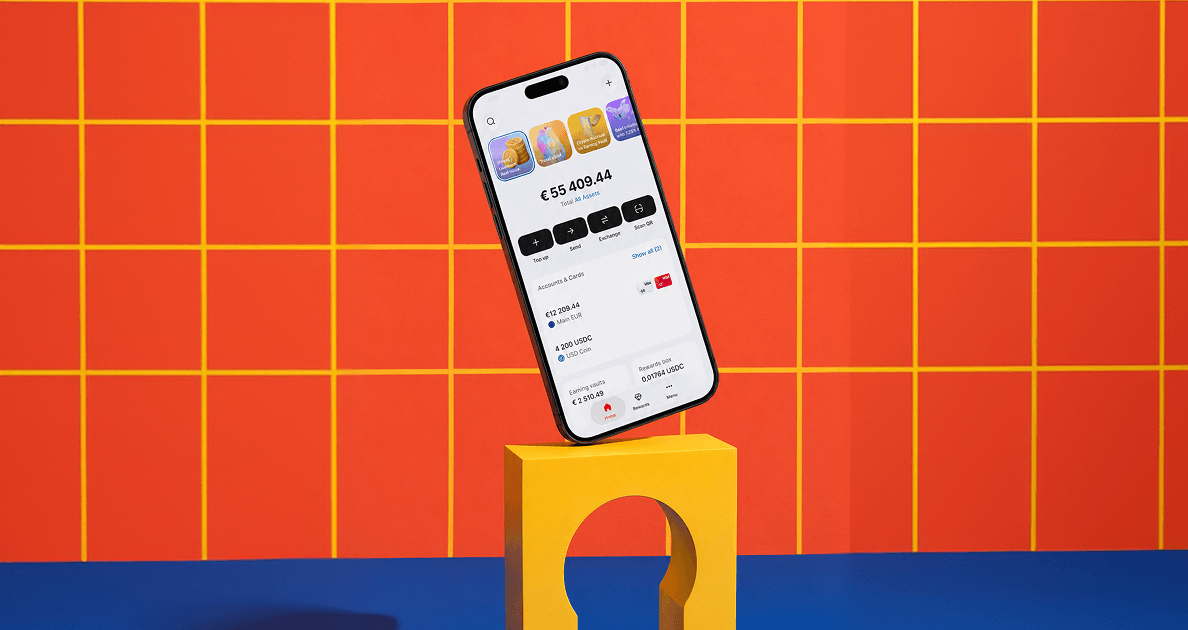
- Brighty operates a custodial model, holding assets on the user’s behalf so that a lost password does not mean lost funds, and pairing balances with cards and IBAN accounts (Brighty, Fees and Limits, 2026).
- Most experienced holders run both models side by side, splitting funds by purpose rather than picking one and moving everything into it.
In This Article
- What does custodial and non-custodial actually mean?
- How do the two models compare feature by feature?
- What are the real risks of each model?
- Which model fits you? A 6-question test
- Can you use both models at the same time?
- Where Brighty fits
- FAQ
What does custodial and non-custodial actually mean?
The difference is who holds the private key that authorises transactions. A custodial provider holds it for you and moves funds when you instruct the app. A non-custodial wallet puts that key in your hands alone, usually as a seed phrase of 12 or 24 words.
Everything else follows from that single fact. A provider that holds the key can reset your password and intervene in a transaction, whether to stop something suspicious or to comply with a court order. Hold the key yourself and none of that can happen to you, which also means none of it can happen for you.
The industry shorthand for this is the phrase “not your keys, not your coins,” which captures the non-custodial argument accurately enough. What it leaves out is the reverse case. Holding your own keys means that a lost seed phrase leaves no remedy at all, and the same applies to a transfer made under duress.
How do the two models compare feature by feature?
Nine features cover the practical differences. Neither column is uniformly better, which is why the choice depends on what the money is for.
| Feature | Custodial account | Non-custodial wallet |
|---|---|---|
| Who holds the private key | The provider | You alone |
| Lost password or device | Recoverable through support | Unrecoverable without the seed phrase |
| Can funds be frozen | Yes, by the provider or by court order | No |
| Identity verification | Required at onboarding | Usually none |
| Counterparty risk | Yes. Provider insolvency or compromise affects you | None |
| Personal security risk | Lower. Coercion cannot bypass provider controls | Higher. A coerced transfer is final |
| Everyday spending | Cards, IBAN transfers and conversion built in | Requires bridging to a separate service |
| Yield on balances | Often built into the product | Possible through DeFi, managed by you |
| Setup effort | Minutes, similar to opening any account | Requires learning key management |
Deposit guarantee context per European Banking Authority. Personal security context per Chainalysis, 2026.
Reading down the table, the pattern is a trade between control and recoverability. Non-custodial wins wherever the threat is an institution failing or intervening. Custodial wins wherever the threat is your own mistake, and it wins clearly on everyday usability.
What are the real risks of each model?
Both models carry genuine risks, and they are different in kind rather than in size. Naming them precisely matters more than picking a side.
Custodial risk is counterparty risk. The provider could become insolvent or suffer a compromise, and it can freeze an account during a compliance review. History gives real examples of exchanges failing with customer funds attached. A custodial balance also depends on how the provider actually holds customer assets, which is disclosed differently by each one and worth reading before depositing anything substantial.
Non-custodial risk is irreversibility. A lost seed phrase ends access permanently, and no support line exists. A mistaken address or a wrong-network transfer cannot be undone. Approving a malicious smart contract can drain a wallet in a single signature.
There is also a physical dimension that gets discussed less than it should. Violent attacks targeting crypto holders reached a record $58 million in 2025, with about $30 million stolen through mid-2026, and home invasions climbing to 37% of incidents from 26% in 2023 (Chainalysis, 2026). Chainalysis links this partly to self-custody setups that can be compromised without any institutional gatekeeper standing in the way, since a coerced transfer from a self-custodied wallet is immediate and final (Chainalysis, 2026). A custodial account with withdrawal limits and review processes gives an attacker far less to extract under duress.
One point applies to both models. Neither carries the €100,000 deposit guarantee that covers EU bank deposits, because crypto held in any arrangement falls outside that framework (European Banking Authority). Choosing custodial over non-custodial buys recoverability from the provider rather than a statutory guarantee.
Which model fits you? A 6-question test
Score one point for A and one point for B on each question, then total them. The result points to a starting model rather than a permanent commitment.
1. How much crypto are you holding relative to your total savings? A) A small share I could afford to lose B) A significant share of my net worth
2. How often do you spend or move it? A) Weekly or more, including everyday purchases B) Rarely, mostly buy and hold
3. Have you ever managed a seed phrase before? A) No, or not confidently B) Yes, with a tested backup
4. What worries you more? A) Losing access through my own mistake B) A company freezing or losing my funds
5. Do you need euro payments and a card alongside crypto? A) Yes, that’s the main reason I want an account B) No, crypto only
6. If you were incapacitated, could someone you trust recover the funds? A) They would contact support B) They would need my seed phrase, which is planned for
Scoring:
- Mostly A: A custodial account fits. The recoverability and built-in spending tools match how you use crypto, and the amounts involved make counterparty risk tolerable.
- Mostly B: A non-custodial wallet fits. You hold enough to make counterparty risk the bigger concern, and you have the key management habits to carry the responsibility.
- Roughly even: Run both. Details in the next section.
The honest reading of question 1 is the one that matters most. Someone holding a meaningful share of their net worth has a different problem from someone holding a spending balance, and the answer changes accordingly.
Can you use both models at the same time?
Yes, and most experienced holders do. The standard approach splits funds by job rather than choosing one model for everything.
A common split works like this. Long-term holdings that will not be touched for months sit in a non-custodial wallet, ideally on a hardware device, where counterparty risk is eliminated and the tradeoff of poor everyday usability costs nothing. A working balance for everyday spending and incoming payments sits in a custodial account, sized so that a total loss would be an inconvenience rather than a catastrophe.
Two habits make the split work in practice. Test the recovery path on the non-custodial side before it matters, by restoring the wallet from the seed phrase onto a second device. And keep the custodial balance deliberately small, topping it up from cold storage as needed rather than leaving everything within reach of a single password reset.
The mistake to avoid is treating the split as permanent. Balances drift as amounts grow, and a working balance that quietly became a life savings deserves a rethink of where it sits.
Where Brighty fits
Brighty is a custodial platform. Assets are held on the user’s behalf, which means a forgotten password does not end access to the funds, and it also means the standard counterparty considerations described above apply.
The reason to choose that model here is what sits alongside the crypto balance. A named IBAN in EUR, USD or GBP receives salaries and client payments over SEPA, Faster Payments or SWIFT, and the same balance funds a Visa or Mastercard for everyday spending, with no monthly card service fee on any plan (Brighty, Fees and Limits, 2026). A non-custodial wallet cannot do those things without bridging into a separate service each time.
The published costs are worth knowing before deciding. Currency conversion runs 0.6% on One, 0.5% on Plus and 0.4% on Pro above free monthly allowances of €0, €2,000 and €5,000, and a Visa purchase in a currency you don’t hold adds 2% (Brighty, Fees and Limits, 2026). Stablecoin balances can also earn yield in Earning Vaults through Aave with no locked funds (Brighty, Homepage, 2026), an option that has no direct non-custodial equivalent without managing DeFi positions yourself.
The sensible framing is a working account rather than a vault. For a spending balance and the short-term stablecoin holdings that come with incoming payments, a custodial account with cards attached does a job that self-custody handles badly. For long-term holdings of significant size, the earlier advice stands: keep them where no provider sits between you and the keys.
FAQ
Is custodial or non-custodial safer?
Neither, in absolute terms. Custodial exposes you to provider failure while protecting you from your own mistakes. Non-custodial removes counterparty risk while making every mistake permanent. The safer choice depends on which failure is more likely for you.
What happens to my crypto if a custodial provider fails?
That depends on how the provider holds customer assets and on the insolvency law where it operates. No deposit guarantee scheme covers crypto, since that framework applies to bank deposits (European Banking Authority). Reading a provider’s own custody disclosures before depositing is the practical step.
Can I lose my crypto in a non-custodial wallet?
Yes, permanently, if the seed phrase is lost or destroyed. There is no recovery process and no support line, which is the direct cost of removing the provider from the arrangement.
Does a custodial account mean the provider can take my money?
It means the provider controls the keys and can freeze an account, typically during a compliance review or on a court order. That control is what also makes password recovery possible.
Are hardware wallets custodial or non-custodial?
Non-custodial. A hardware wallet stores the private key on a dedicated device, so you hold the key while keeping it offline and away from a networked computer.
Why do violent attacks matter to this decision?
Because a coerced transfer from a self-custodied wallet is immediate and irreversible, while a custodial account’s withdrawal limits and review processes give an attacker less to extract. Chainalysis recorded a record $58 million stolen in violent attacks in 2025 and roughly $30 million through mid-2026 (Chainalysis, 2026).
Do I have to verify my identity for a custodial account?
Generally yes, as part of standard onboarding. Non-custodial wallets typically require no verification, which is one of the practical differences between the two models.
Which model should a beginner start with?
A custodial account is the usual starting point, because the consequences of a mistake are recoverable while the habits are still forming. Moving longer-term holdings into self-custody makes sense once the amounts grow and key management feels routine.
Download Brighty to run a custodial working balance with cards and a named IBAN attached, and keep your long-term holdings wherever you prefer.