What Is a Crypto Card and How Does It Work: Full 2026 Guide
Crypto cards come in four types, and who holds your funds differs in each. How they work at the till, and which type fits how you actually spend.
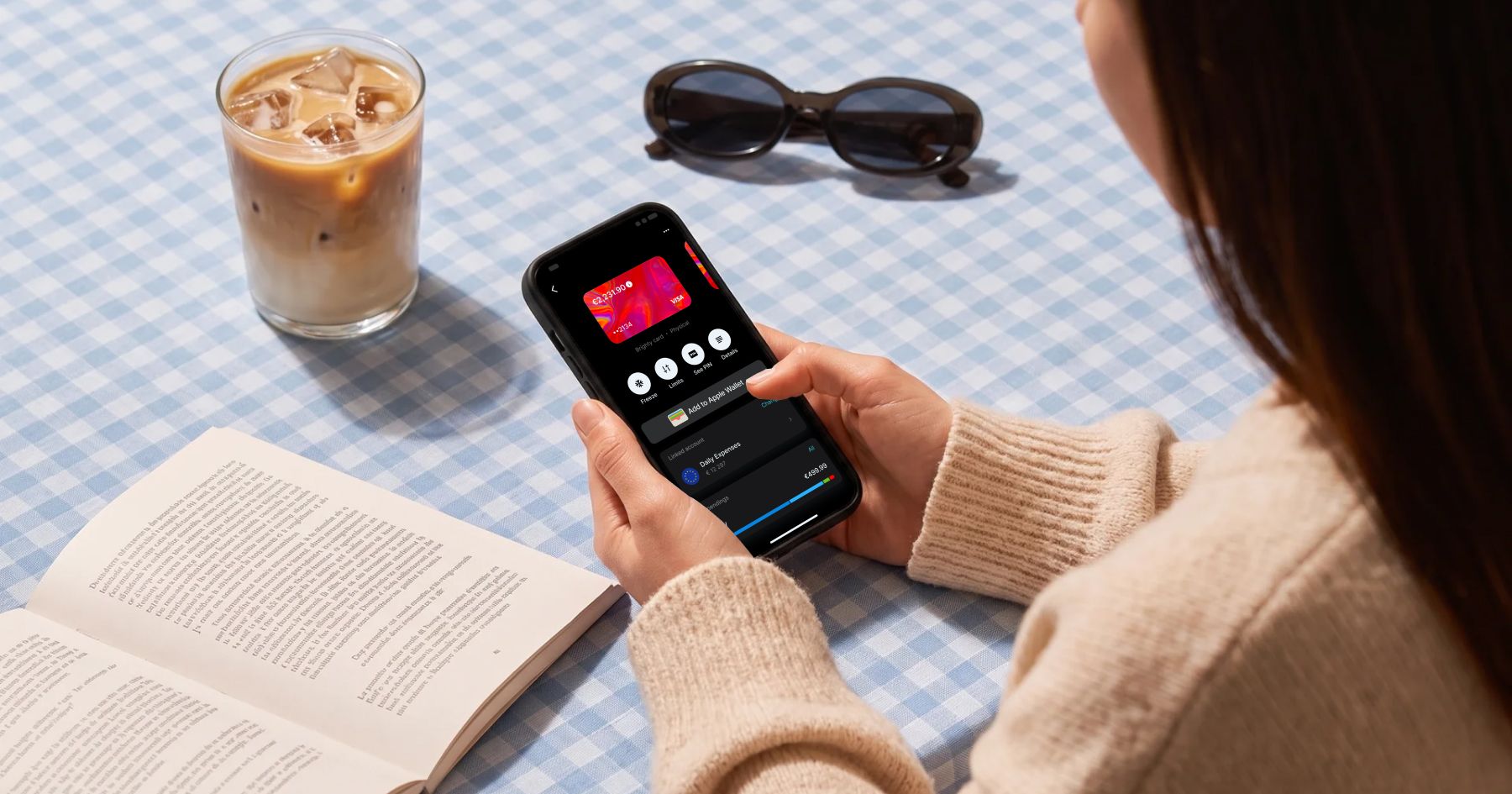
What is a crypto card and how does it work?
A crypto card is a payment card funded by a crypto balance rather than a bank account. It converts the required amount to local currency at the moment of purchase, so the merchant receives ordinary money. Four types exist in 2026, and the comparison below shows how each one differs.
Key Takeaways
- Crypto cards run on standard Visa and Mastercard rails, and the conversion to local currency happens instantly at the point of sale with no change on the merchant side (Visa, Crypto-linked Cards, 2026).
- The four types differ mainly in who holds the funds between purchases, ranging from a custodial provider at one end to your own smart wallet at the other.
- Self-custodial cards keep assets in the user’s own smart wallet until a purchase settles. Gnosis Pay states that funds stay accessible even if the company discontinues its service (Gnosis Pay, Understanding Self-Custody).
- Identity verification applies to self-custodial cards too, since connecting to the Visa network requires it (Gnosis Pay, Understanding Self-Custody).
- On Brighty, the card monthly service fee is free across all plans and card types, while a Visa purchase in a currency you don’t hold adds 2% (Brighty, Fees and Limits, 2026).
- Fees are set by the card issuer rather than by the network, which is why two cards carrying the same logo can cost very different amounts (Visa, Crypto-linked Card).
In This Article
- What is a crypto card?
- What are the four types of crypto card?
- How does a crypto card work when you pay?
- How do self-custodial crypto cards work differently?
- Which type of crypto card should you choose?
- How Brighty fits into the picture
- FAQ
What is a crypto card?
A crypto card is an ordinary payment card whose funding source is a crypto balance rather than a bank account. It carries a Visa or Mastercard logo, works at any terminal accepting that network, and looks unremarkable to the cashier.
The card itself is not special. What differs is the plumbing behind it, where a conversion step turns digital assets into the local currency the merchant expects. That conversion is invisible at the till and happens in the moment of authorization.
Cards also come in virtual and physical forms across every type below. A virtual card exists in the app as a number, usually ready within minutes of ordering. It works online and through Apple Pay or Google Pay. A physical card arrives in the post and adds ATM access, which virtual cards cannot provide.
What are the four types of crypto card?
Four models exist in 2026, distinguished mainly by who holds the funds between purchases. That single difference decides whether a lost password is recoverable, and it shapes both the counterparty risk and the tax treatment.
| Type | Who holds the funds | How it works | Trade-off |
|---|---|---|---|
| Custodial debit | The provider | Balance sits with the provider, converted at purchase | Password recovery possible, counterparty risk applies |
| Self-custodial debit | You, in your own smart wallet | Assets stay on-chain until a purchase settles | No counterparty risk, no recovery if keys are lost |
| Crypto credit | The issuer lends fiat | Spend on a credit line, rewards paid in crypto | No disposal per purchase, but interest and credit checks apply |
| Prepaid | The provider, as a loaded balance | Load in advance, spend down the balance | Simple and contained, though reloading adds friction |
Custodial debit is by far the most common model in Europe, and most cards marketed as crypto cards fall into it. Self-custodial debit is the newest category and the smallest. Crypto credit cards remain scarce across the EEA, with several having withdrawn from the region entirely.
How does a crypto card work when you pay?
About two seconds pass between the tap and the beep, and the conversion happens inside them. The merchant’s terminal never knows crypto was involved.
The sequence:
- The terminal requests authorisation. The merchant’s terminal routes a charge into the Visa or Mastercard network, exactly as it would for a bank card.
- The network reaches the issuer. The network reads the card number and forwards the request to whoever issued the card.
- The funding asset converts. The issuer converts precisely enough of the balance to cover the purchase, at the rate quoted in that instant.
- The merchant receives local currency. Approval returns to the terminal, and the shop is paid through the network’s normal settlement process (Visa, Crypto-linked Cards, 2026).
Two consequences follow. Merchant acceptance is effectively universal wherever the network reaches, because the shop needs no wallet and nothing to opt into. And the exchange rate locks at authorisation, so a purchase during a volatile hour is priced at that instant.
One practical wrinkle catches people out. Hotels and fuel stations often place a temporary hold larger than the final bill, which reserves the funding asset until the real amount clears. A balance can look lower than expected for a day or two afterwards.
How do self-custodial crypto cards work differently?
The conversion sequence is identical, but the funds never leave the user’s own wallet beforehand. Assets sit on-chain in a smart wallet the user controls, and only move at the moment a purchase settles.
Gnosis Pay is the clearest example of the model. Its documentation describes spending stablecoins directly from a Gnosis Safe wallet the user controls, without moving funds into a custodial account first, and states that funds remain accessible even if the company stops operating (Gnosis Pay, Understanding Self-Custody). Purchases work at the same 80 million-plus Visa merchants as any other card on the network (Gnosis Pay Documentation).
Two points are commonly misunderstood about this category. Identity verification still applies, because connecting a self-custodial wallet to the Visa network requires meeting the same financial regulations as any other card programme (Gnosis Pay, Understanding Self-Custody). And the wallet is usually purpose-built rather than an existing one, since payment approvals need specific smart contract configuration to work instantly with the card network.
The trade-off mirrors self-custody generally. Removing the provider removes counterparty risk, at the cost of removing the recovery path if keys are lost.
Which type of crypto card should you choose?
Match the type to what the card is for, since each model handles a different job well.
- Custodial debit suits everyday spending backed by an account that can also receive payments. Recovery is possible, and most of these cards come with conversion and transfer features attached.
- Self-custodial debit suits someone already comfortable managing a wallet who wants no company holding funds between purchases. Key management becomes the user’s responsibility.
- Crypto credit suits anyone wanting rewards without a disposal on each purchase, though availability across the EEA is limited and a credit check applies.
- Prepaid suits contained budgets or gifting, where a fixed loaded amount is the point rather than a limitation.
For most European users the practical choice is between the first two. The question that settles it is whether the recovery path matters more than removing the counterparty, which usually comes down to how much sits on the card and how confident the user is with a seed phrase.
How Brighty fits into the picture
Brighty sits in the custodial debit category, issuing virtual Visa and virtual Mastercard cards on every plan with a physical Visa on Plus and Pro. The distinguishing feature is the account behind the card rather than the card itself. The published costs (Brighty, Fees and Limits, 2026):
- Monthly service fee: free on every plan and card type
- Virtual card issue fee: €2.99, with one free card on One, two on Plus and three on Pro
- Foreign transaction fee: 2% on Visa. None listed on the virtual Mastercard
- Conversion between held currencies: 0.6% on One, 0.5% on Plus, 0.4% on Pro, above free allowances of €0, €2,000 and €5,000
- ATM, physical card only: €3.50 inside the EEA on Plus and €3.00 on Pro, with 3.5% and 3% added outside
What the card connects to matters more than its fee schedule. A named IBAN in EUR, USD or GBP receives salaries and client payments, and stablecoin balances can earn yield in Earning Vaults through Aave with no locked funds (Brighty, Homepage, 2026). Card-only products in the other categories generally cannot do either.
Two honest caveats. The One plan’s €0 free conversion allowance means converting at the full 0.6% from the first euro. And the custodial model carries the counterparty exposure described above, so a balance that grows into long-term savings belongs somewhere the user holds the keys.
FAQ
Can merchants tell I’m paying with crypto?
No. The terminal processes a standard Visa or Mastercard transaction and the merchant receives local currency through normal settlement (Visa, Crypto-linked Cards, 2026).
Do I need identity verification for a self-custodial card?
Yes. Gnosis Pay confirms that verification is required during onboarding, because connecting to the Visa network means meeting the same financial regulations as any card programme (Gnosis Pay, Understanding Self-Custody).
Which type is safest?
Neither extreme wins outright. Custodial protects against losing your own keys while exposing you to provider failure. Self-custodial removes the provider while making a lost key permanent. The safer option depends on which failure is more likely for you.
Do crypto cards work everywhere?
Wherever the card network is accepted, since the conversion happens between the issuer and the network rather than at the merchant. Restrictions apply to where a card can be issued rather than where it can be used.
What exchange rate do I get?
The rate quoted at the moment of authorisation, when the card is tapped. It stays locked for that transaction even though the merchant is paid later during settlement.
Why do two crypto cards on the same network cost different amounts?
Because the network provides the rails while the issuer sets the fees (Visa, Crypto-linked Card). Conversion spreads and foreign transaction fees come from the provider rather than from Visa or Mastercard.
Download Brighty to get a virtual card in minutes with no monthly service fee, backed by an account that holds euros and stablecoins together.